
Land Stewardship
the difference between protecting and projection

The first thing no one tells you about land stewardship is that it isn’t romantic.
It isn’t soft‑focus meadows or poetic sunrises or the gentle hum of a well‑behaved ecosystem.
It’s tyres buried in gullies.
It’s asbestos roofing sheets you didn’t put there.
It’s the quiet shock of discovering what other people have done to a place you love.
One or two local residents treat a beautiful place as a dumping ground. Others walk past with their dogs or horses and never stop to pull plastic from the hedgerows. But then there are the majority — the ones who, like me, see living in the countryside as a responsibility of custodianship during our short stint as land‑owners on the earthly plane.
Stewardship begins with seeing the land as it really is — not as you hoped it would be.
And then choosing it anyway.
Belonging as an action
My land is teaching me that belonging is an action, not a feeling.
Every day, I learn a little more about what it means to be responsible for a piece of earth. Not in the ownership sense — that’s paperwork. In the custodial sense — that’s identity.
It’s the difference between “this is my land” and “I am accountable to this land.”
One is possession.
The other is relationship.
Behind me is old wire fencing and posts that need clearing out.
Nothing glamorous.
Just the next right thing
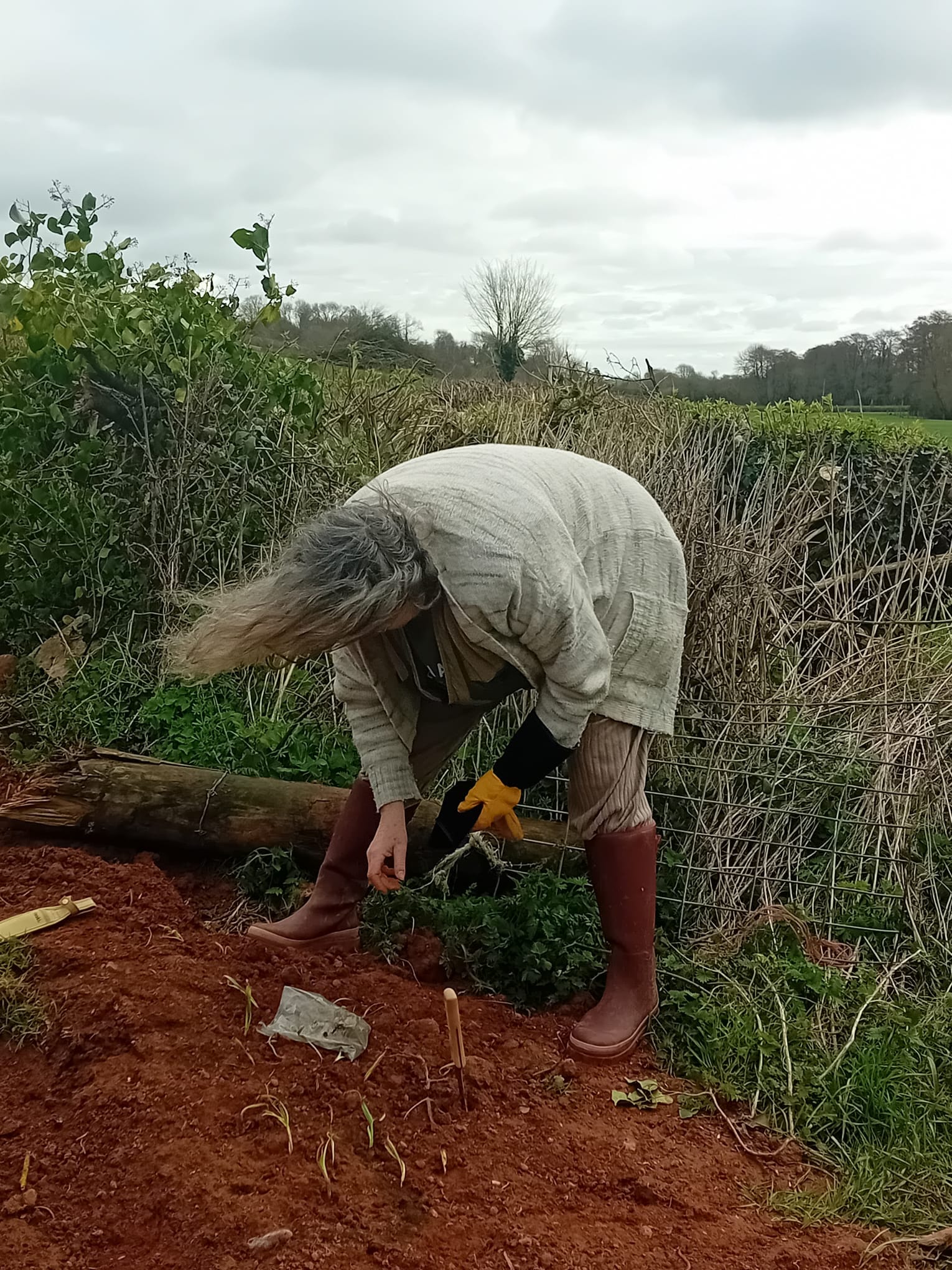
The unphotogenic work
Stewardship is a long list of small, unphotogenic tasks:
• clearing historic waste
• restoring boundaries
• repairing what’s been neglected
• choosing plants that belong, not plants that impress
• listening to the wildlife corridor before you design around it
• letting the land tell you what it wants to be
It’s not a makeover.
It’s a conversation.
And sometimes the land speaks in the language of mud, mess, and heavy lifting.
There is a moment — a quiet one — when the land starts to trust you back.
For me, it was the day the tyres were removed from the gully.
The moment the last piece of someone else’s chaos was lifted out, the whole place exhaled.
I did too.
Stewardship is not about imposing order.
It’s about restoring dignity.
Regeneration as a human process
I’m learning that regeneration is slow, intentional, and deeply human.
It’s not just ecological.
It’s emotional.
You can’t rush a landscape into coherence any more than you can rush yourself into healing.
You sequence.
You observe.
You respond.
You wait.
And in that waiting, something shifts.
The land becomes less of a project and more of a partner.
This year, I’m stepping into my role more fully.
Not just as a grower.
Not just as a rose archivist.
But as a steward — a woman responsible for a piece of earth that is slowly, steadily, becoming itself again.
I’m learning to see beauty in the unglamorous parts — the paperwork, the boundaries, the clearing, the planning, the patience.
Because that’s where the real work happens.
That’s where the land begins to thrive.
And maybe that’s where I do too.
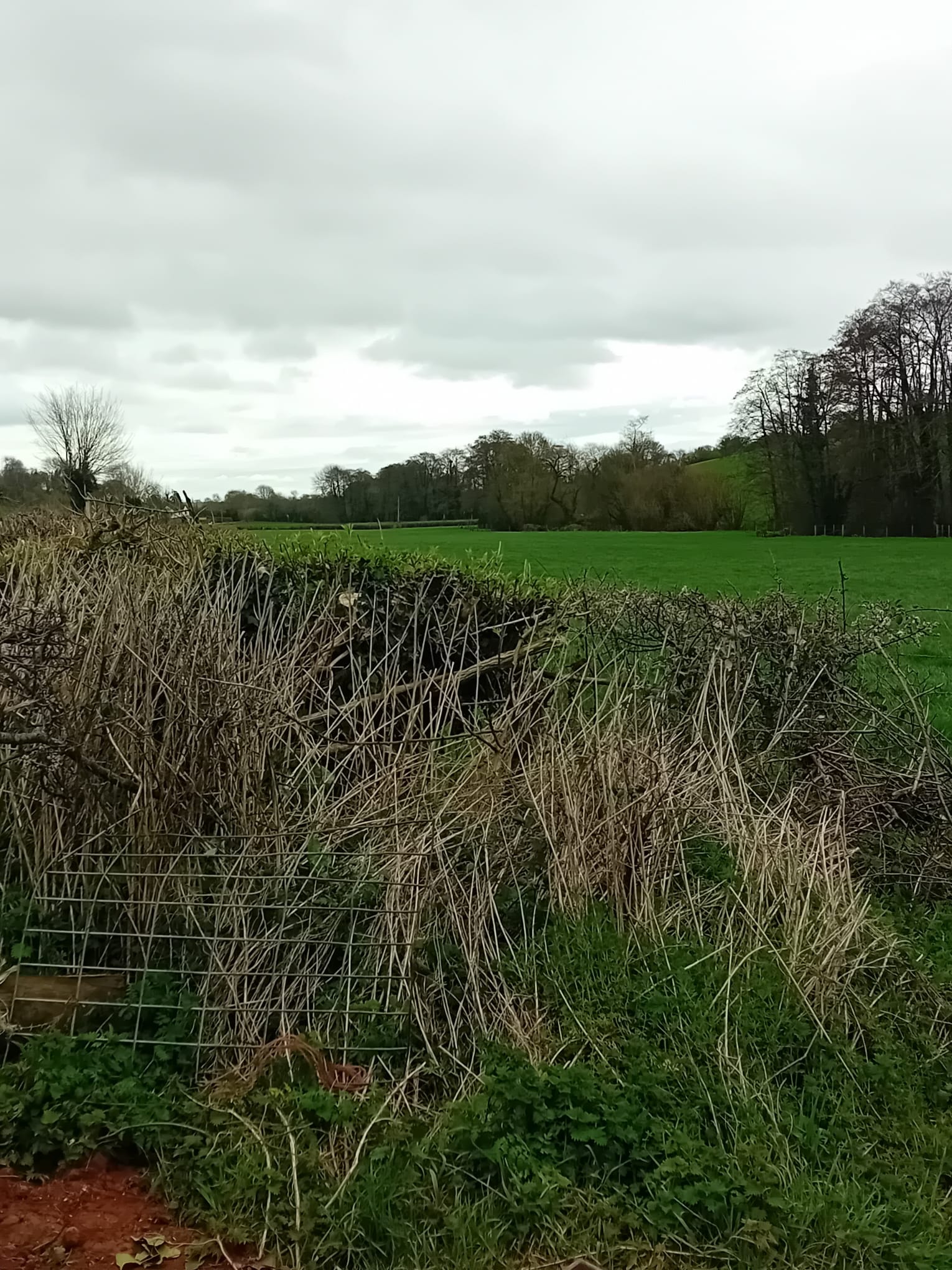
The rescue work
Then there are the moments of rescue — the small acts that stitch a place back together.
Today we lifted six heritage roses from their old life and brought them home.
Not bought, not ordered, not curated — rescued.
Luke’s nan has dementia and needs to move into a home, and her sixty‑year garden is at risk of being overwhelmed or lost entirely. Many of her roses came with her from her grandmother’s farm, some dating back to the early 1800s. Their roots still held the shape of the soil they came from, as if carrying a memory.
For now, they’re planted by the gate, settling themselves in, kept company by a handful of primroses from Taylor’s allotment and the Kiftsgate rose that arrived with the last of the Cornish Rose order of It’s a Wonderful Life — which I really must remember to add to the website. It’s a stunning pale apricot, open and blousy, with a fabulous perfume.
Everything is heeled in until we clear the bramble and I can plant the old man’s beard that’s been hardening off this week.
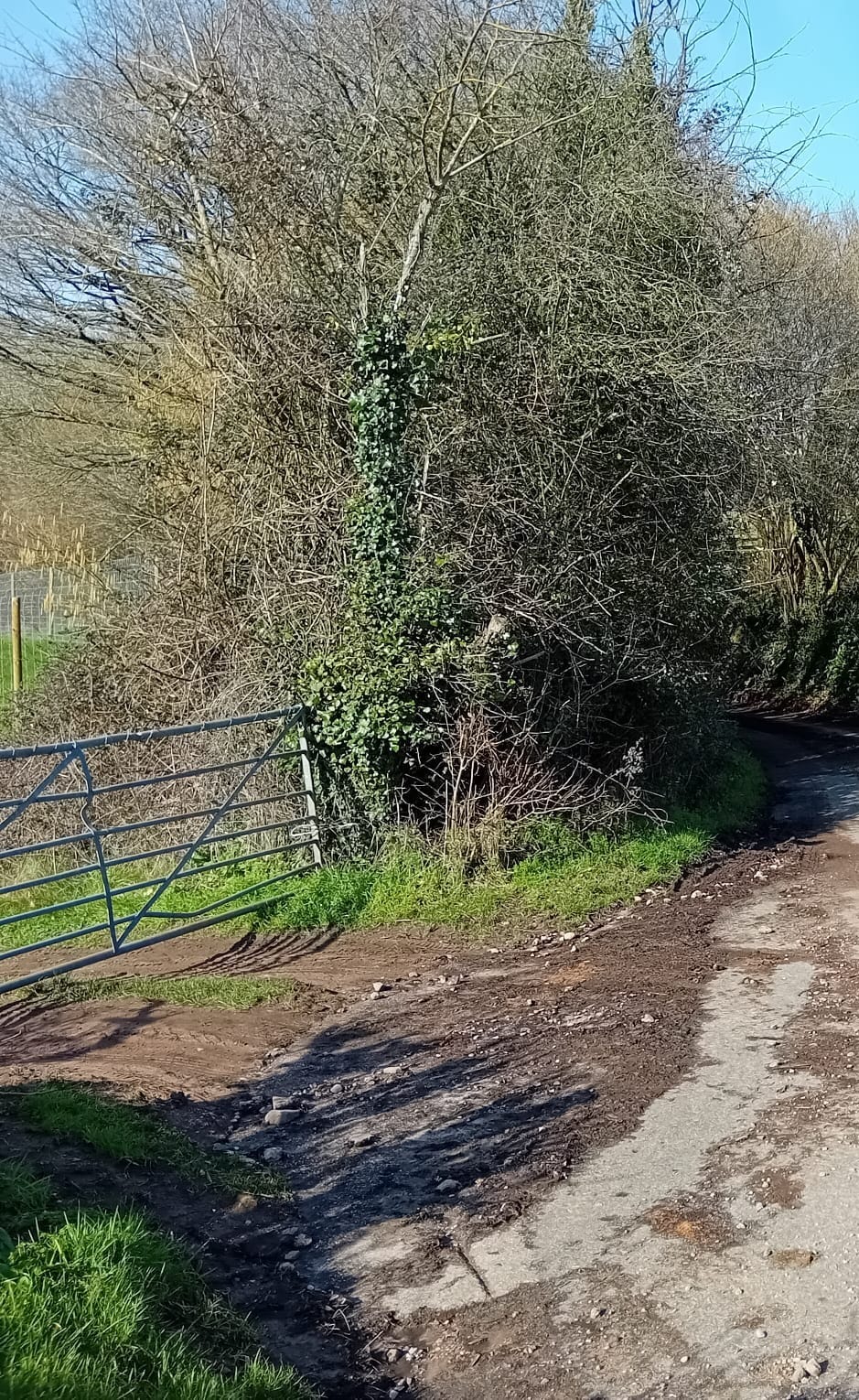
You can see the gate and the ivy climbing the deadwood, and all the bramble behind it — all of it waiting its turn in the sequence.
It felt like returning something to the land that had been missing: not perfection, not polish, but lineage.
A quiet beginning.
A promise that this place will grow stories as well as plants.
Love it. We spend too much of our time cleaning up highway rubbish at our cocoa and vanilla farm in Belize. That definitely doesn't make it to Instagram. But there is a lot to be said for just walking around, noticing things, the wind, the insects, the seasons before you start changing things. A great post, thanks again.
If only everyone looked after their properties half as well as you!